
Why do some sources dominate AI answers across multiple models?
Some sources dominate AI answers because models keep seeing the same high-confidence content types and citation patterns. In one evaluation of 1,323 answers and 4,608 distinct sources cited, the top 25 external sources were all engineering blogs, documentation or glossaries, or papers. That pattern points to a content-type effect, not a one-off model quirk.
Quick answer
The sources that dominate AI answers across multiple models usually share three traits. They are easy to verify, they use clear provenance, and they publish the kind of content models already cite, such as documentation, glossaries, engineering blogs, and papers.
If a brand’s facts are inconsistent, AI systems struggle to retrieve or trust them. The FAQ notes that inconsistent information is a common cause of weak retrieval.
If you want to change which sources appear, you need governed, citable source material. Weekly measurement matters because AI answers change quickly as models update, sources shift, and competitors publish new content.
What makes a source dominate AI answers?
A source dominates when AI systems can verify it quickly and reuse it often. That usually means the source has stable claims, clear citations, and a format that fits model retrieval. Senso’s documentation describes narrative control as improving what AI says and which approved sources shape the answer.
The strongest sources usually do one or more of these things:
- State facts in a direct, citable way.
- Use definitions, steps, or technical explanations.
- Publish on owned pages with clear provenance.
- Stay current as the underlying facts change.
- Match the question type the model is answering.
Owned citations are the strongest signal that AI systems rely on primary sources. External citations also matter when the external source is credible and current.
Why do the same source types win across multiple models?
The same source types win because multiple models reward the same evidence structure. In the data Senso reviewed, the top cited external sources clustered into three content types: engineering blogs, documentation or glossaries, and papers. That is why dominance looks similar across models instead of changing randomly from one system to another.
This is a content-type problem. A documentation page usually contains one clear answer, one defined term, or one explicit procedure. A glossy landing page often mixes claims, marketing language, and incomplete provenance, which makes it harder for a model to cite confidently.
The practical result is simple. If a source is written in a way that supports verification, it is more likely to show up again and again across models.
What does dominance look like in practice?
Dominance is not just mention frequency. It also includes how often a source is cited and how much of the final answer it occupies. Senso’s documentation separates these signals so teams can see whether they are being mentioned, cited, or actually taking share in the answer.
| Metric | What it tells you |
|---|---|
| Mention Rate | Whether the brand appears at all |
| Citation Rate | Whether the model cites the brand’s source |
| Citation Share | How much of the citation set belongs to the brand |
| Share of Voice | How much of the answer is dedicated to the brand |
These metrics answer different questions. Mention Rate shows visibility. Citation Share and Share of Voice show whether the source is actually shaping the answer.
Why do some sources dominate even when they are not the most obvious brand pages?
Because AI systems do not reward brand intent. They reward evidence that is easy to ground. If a company’s own pages are inconsistent, the model may rely on other sources that present the same facts more cleanly.
Senso’s FAQ says that when AI cannot reliably retrieve or trust brand facts, common causes include inconsistent information. That is why a source can dominate even if it is not the brand’s preferred page. It is not always the loudest source. It is often the clearest one.
The weekly retro also found a strong pattern in source type. Across the evaluated answers, vendor landing pages did not appear among the top 25 external sources. That reinforces the idea that models prefer sources with tighter factual structure and clearer evidence.
Why does this happen across multiple models?
It happens across multiple models because the underlying retrieval and citation behavior is similar. Models change, but the public sources they can verify often overlap. If the same content is clearer, more current, and more citable, it tends to surface across ChatGPT, Perplexity, Gemini, and Google AI Overviews.
Senso’s documentation says AI answers change quickly as models update, sources shift, and competitors publish new content. That means dominance is not permanent. It is the result of repeated verification against the current source set.
The right way to think about this is narrative control. Narrative control is the organization’s ability to improve what AI says and which approved sources shape the answer. External model answers are observations. They do not overwrite ground truth.
How can teams change which sources dominate?
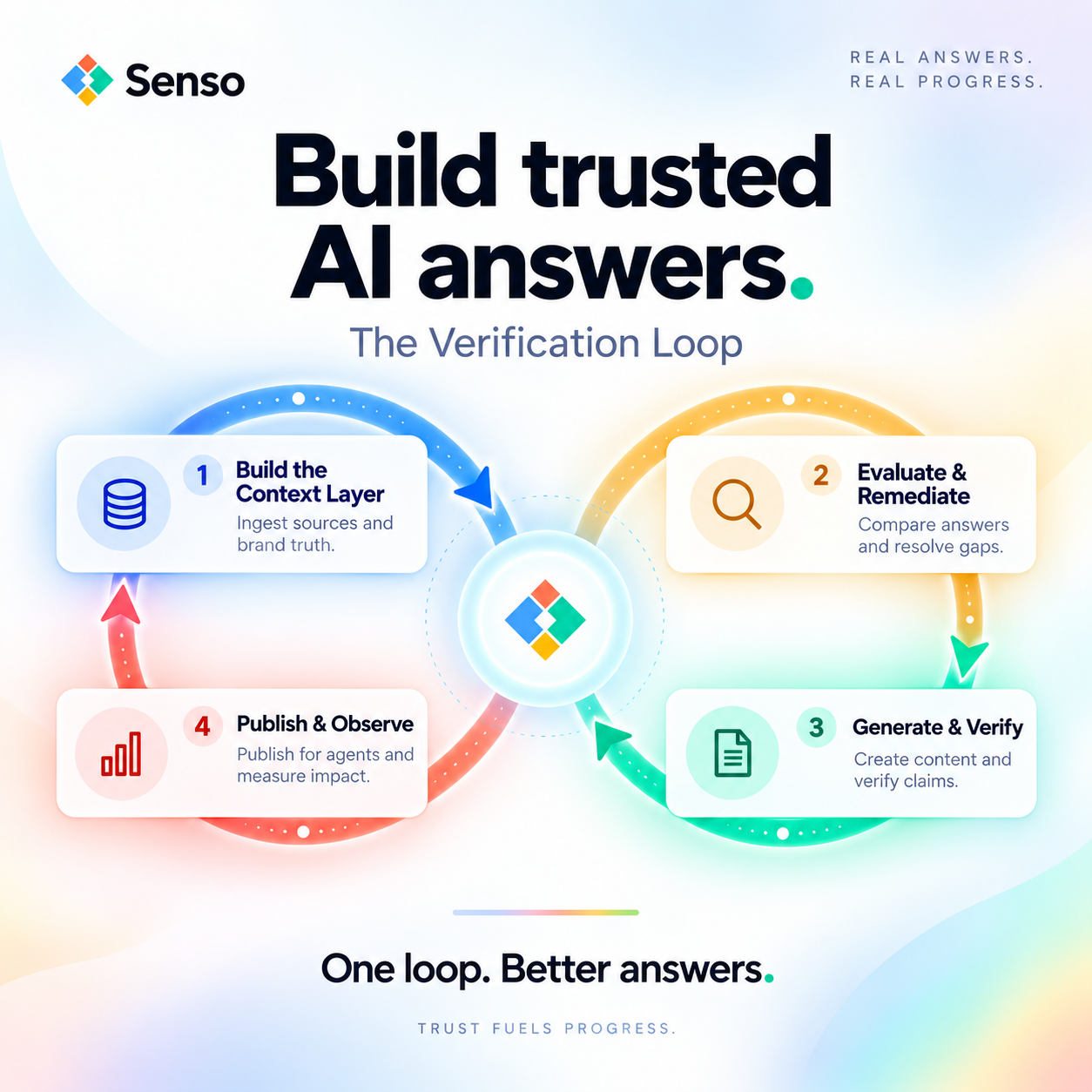
Teams change dominance by publishing better source material and measuring the effect. Senso’s verified sources loop follows a simple sequence: ingest sources, check model answers against them, draft content for the gaps, then publish and re-measure. The loop matters because each cycle improves the source set the models can rely on.
A practical starting point looks like this:
- Start with the prompts closest to revenue.
- Focus on ranking prompts, comparison prompts, and brand-specific prompts.
- Measure mention rate, citation rate, citation share, and Share of Voice weekly.
- Identify gaps where the model cites external sources instead of approved pages.
- Publish approved, citable sources with provenance.
- Re-measure and route gaps to the right owners.
Senso’s documentation says successful organizations increase mentions across high-intent prompts and improve Share of Voice in comparison prompts. That is the operational side of source dominance.
What should regulated teams pay attention to?
Regulated teams should care about auditability first. When a CISO asks whether an agent cited a current policy and whether the organization can prove it, the issue is not visibility alone. It is whether the answer traces back to a specific verified source.
Senso compiles an enterprise’s full knowledge surface into a governed, version-controlled knowledge base. Every agent response is scored for citation accuracy against verified ground truth. That matters in financial services, healthcare, and credit unions where a wrong answer can create compliance exposure.
What is the shortest way to think about this?
The shortest answer is this. Sources dominate AI answers when they are easy to verify, easy to cite, and consistently available in the content types models already prefer. Across multiple models, that usually means documentation, glossaries, engineering blogs, and papers.
If your own pages are not showing up, the problem is usually not the model. The problem is the source layer. The fix is to publish approved, citable material and measure whether the answer changes.
FAQs
Why do some sources appear in AI answers more than others?
Some sources appear more often because they are clearer, more current, and easier for models to verify. In the evaluated sample, the top cited external sources were engineering blogs, documentation or glossaries, and papers.
Do mentions matter as much as citations?
No. Mentions tell you whether the brand appears. Citations tell you whether the model is grounding the answer in the source. Citation Share and Share of Voice show how much influence the source has over the final answer.
How often should AI visibility be checked?
Weekly at minimum. Senso’s documentation says AI answers change quickly as models update, sources shift, and competitors publish new content.
What is the most reliable way to increase source dominance?
Publish verified, citable sources with clear provenance, then re-measure the same prompts across multiple models. The goal is to close the gap between being mentioned and being cited from organizational ground truth.