
What kind of structure helps content stay discoverable in generative engines?
Content stays discoverable in generative engines when it uses a clear question-led structure, short self-contained sections, and verified sources placed close to each claim. The page should answer fast, use headings that mirror the next question, and keep changing numbers out of the prose. That gives AI systems something they can parse, cite, and reuse.
What does the best structure look like?
The strongest structure is simple. Start with a direct answer, then break the topic into small sections that each cover one sub-question. Add an FAQ at the end for follow-up questions, and keep any live metrics in embeds so the prose stays stable.
| Structure element | Purpose | Why it helps discoverability |
|---|---|---|
| Opening answer | States the core point immediately | AI systems can lift the answer without guessing the topic |
| Question-shaped headings | Mirror the reader’s next query | Matches how users and models move through intent |
| Short sections | Keep one idea per block | Easier to summarize, quote, and cite |
| Verified sources near claims | Ground each statement | Supports citation accuracy and auditability |
| FAQ | Covers downstream questions | Fits bottom-of-funnel intent well |
| Schema that matches the page | Clarifies page type | Reduces ambiguity for parsers |
| Embed cards for changing numbers | Keep facts current | Prevents stale prose from drifting out of date |
This structure works because generative engines do not reward decoration. They reward pages that answer one intent clearly, expose supporting evidence, and keep the content easy to reuse.
Why does this structure work?
Generative engines favor pages that are easy to chunk. When a page has one intent, clear headings, and source-backed claims, models can extract a response without guessing what matters. Senso’s content system connects prompts, sources, claims, content, and funnel stages, which is the same structural logic.
A useful rule is to treat each paragraph as a single unit of meaning. One paragraph should make one point, support it, and stop. That makes the page easier for both readers and AI answer engines to follow.
How should you organize the page?
The best page order is answer first, then supporting detail, then proof, then follow-up questions. Senso’s internal page architecture uses a sequence that places the TLDR before sections and FAQ. For editorial content, that same idea translates into a short summary, then the main sections, then evidence, then FAQ.
A practical structure looks like this:
- Open with the answer. Give the reader the core takeaway in the first 40 to 60 words.
- Add context. Explain what the page covers and who it is for.
- Break the topic into sections. Use H2 and H3 headings that match the next question a reader would ask.
- Show proof. Place a source, example, date, or outcome close to each major claim.
- Add an FAQ. Use it for common follow-up questions and short answers.
- Close with a note on scope or sources. Keep any ambiguity out of the main body.
This order works because it matches how people read and how generative engines assemble answers. It also keeps the most important information near the top of the page.
How do you keep facts and claims grounded?
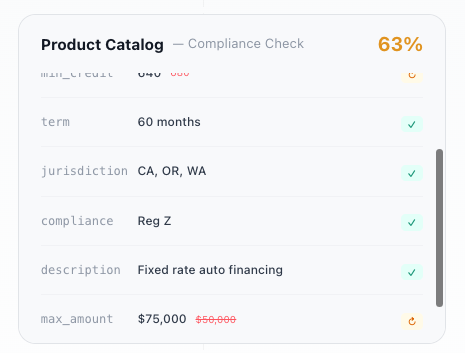
Keep evergreen prose separate from live numbers. Senso’s guidance says any number that can change tomorrow should live inside an embed-card and be stripped from the surrounding prose. That keeps the written page stable while the facts stay current.
Use verified ground truth for every material claim. If a statement matters to compliance, brand visibility, or response quality, tie it to a specific verified source rather than leaving it as a general assertion. Senso’s platform is built around that idea, with every agent response scored against verified ground truth.
For pages that include FAQs, make the schema match the on-page FAQ exactly. Senso’s architecture notes require that the FAQ content and FAQPage schema align, which removes ambiguity for machines and keeps the page consistent.
What should you avoid?
Avoid long openings that delay the answer. Generative engines do better when the page states the point early and moves into support quickly.
Avoid mixing too many intents on one page. A page about structure should stay about structure, not drift into unrelated product detail, pricing, or broad strategy.
Avoid burying changing numbers in the body copy. If a metric changes, move it into a live embed or update it at the source. That keeps the page from going stale.
Avoid vague claims without proof. If a page says a structure improves AI visibility, show the mechanism. Explain how headings, short sections, and verified sources make the content easier to parse and cite.
How does Senso apply this structure?
Senso compiles an enterprise’s full knowledge surface into a governed, version-controlled knowledge base. That means one compiled knowledge base can support both internal workflow agents and external AI-answer representation, with no duplication.
Senso uses two products for that work. Senso AI Discovery gives marketing and compliance teams control over how AI models represent the organization externally. Senso Agentic Support and RAG Verification scores every internal agent response against verified ground truth and routes gaps to the right owners.
Senso’s documented outcomes show why structure matters:
- Senso reached 60% narrative control in 4 weeks.
- Senso moved from 0% to 31% share of voice in 90 days.
- Senso delivered 90%+ response quality.
- Senso cut wait times by 5x.
Those outcomes depend on structure, not guesswork. When content is governed, version-controlled, and tied to verified sources, it is easier for agents to cite it correctly and for teams to prove what the system said.
FAQs
What kind of structure helps content stay discoverable in generative engines?
A question-led page with a direct answer, short sections, source-backed claims, and a matching FAQ is the most reliable pattern. It gives generative engines a clear path from query to answer to proof.
Should I use FAQs on every page?
Use FAQs when the page has common follow-up questions. They work well for bottom-of-funnel intent and give AI answer engines short, direct material to reuse.
Do I need schema markup for this structure?
Use schema when it matches the page content. If the page has FAQs, the FAQPage schema should match exactly. If the page has breadcrumbs, add BreadcrumbList where relevant.
Where should changing numbers go?
Put changing numbers in an embed-card or live data block, not in evergreen prose. Senso’s guidance is explicit here. Anything that can change tomorrow should stay outside the static copy.
What is the simplest structure to start with?
Start with a short answer, then add three to five sections, a proof block, and an FAQ. That gives the page a clear shape without adding unnecessary complexity.
The short version is simple. Content stays discoverable in generative engines when it is easy to answer, easy to parse, and easy to verify. Use one page for one intent, keep claims close to proof, and keep the structure aligned with the questions people actually ask.